To truly cook A La Turca, one must look beyond the recipe and into the history of the pantry. Turkish cuisine is a magnificent bridge, a culinary map that traces the migration of Turkic tribes from Central Asia, through the refined kitchens of the Ottoman Empire, to the sun-drenched coasts of the Aegean.
The secret to our food isn't complexity; it is the quality and soul of a few foundational ingredients. Let’s dive into the "Holy Grail" staples that define every Turkish table.
1. Yogurt: Our Ancestral Gift to the World
If there is one ingredient that defines "Turkishness," it is yogurt. Historically, yogurt was the primary way Central Asian nomadic Turkic tribes preserved milk while on the move. The word itself is derived from the Old Turkish verb yoğurtmak (to thicken or knead).
In Turkey, yogurt is treated with a reverence that borders on the sacred. It isn't just a breakfast food; it is a cooling agent, a thickener, and a sauce.
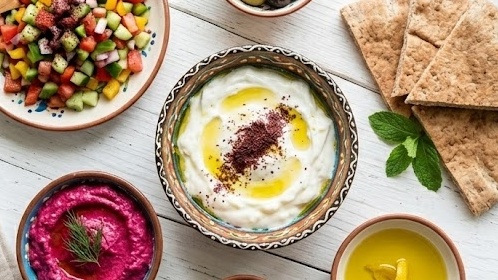
The Tradition: While many cultures enjoy fermented dairy, the Turkish technique of "straining" yogurt (Süzme Yoğurt) creates a thick, labneh-like consistency that is the base for our most famous appetizers (Mezes).
The Cultural Marker: There is a common saying in the culinary world: If you see someone putting a dollop of plain, unsweetened yogurt on top of savory pasta, fried eggplant, or a hot meat stew, they are Turkish. No doubt about it. We use it to balance the heat of spices and the richness of fats.
2. Olive Oil: The Shared Mediterranean Soul
Turkey is one of the world's leading producers of olive oil, and our relationship with the olive tree is ancient. Most of our production comes from the Aegean region, where the climate creates a smooth, high-quality oil.
A Shared Heritage: We take great pride in our oil, but we also acknowledge our neighbors. Turkish, Spanish, Greek, and Italian olive oils are all siblings of the same Mediterranean sun.
Spanish & Italian oils are world-renowned for their nutty and herbal profiles.
Turkish olive oil often shares the robust, peppery finish found in the best Greek varieties.
In Turkey, we honor this ingredient with a specific category of food called Zeytinyağlılar. These are vegetable dishes simmered in olive oil, a little sugar, and lemon, then served cold. It is a technique designed to let the oil's purity take center stage.
3. Salça: The Umami of the East
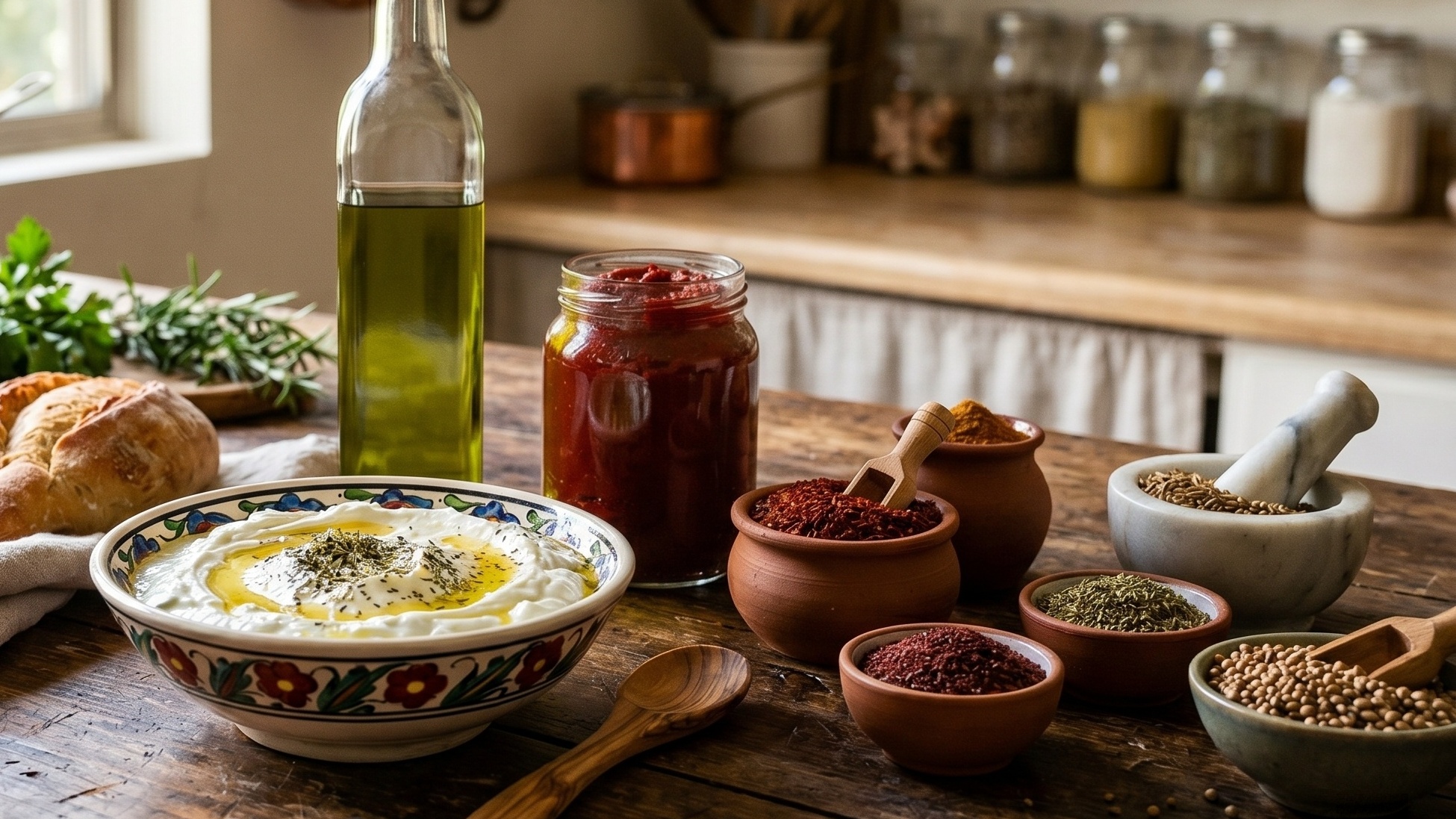
In many Western kitchens, tomato paste is a background player. In a Turkish kitchen, Salça is the lead actor. We typically use a combination of Domates Salçası (tomato paste) and Biber Salçası (red pepper paste).
The traditional way to make salça is by sun-drying pureed vegetables on rooftops until the water evaporates, leaving behind an intensely savory paste. Almost every Turkish "pot dish" (Tencere Yemeği) starts by roasting a spoonful of salça in butter or oil until it smells fragrant. This provides the signature deep-red color and rich depth that defines our stews and bulgur dishes.
4. Fragrant Spices: The Silk Road Legacy
Turkish food is rarely "spicy-hot," but it is always deeply fragrant. Because Anatolia sat at the heart of the Silk Road, our spice cabinets are legendary.
Pul Biber (Aleppo Pepper): These dried flakes provide a mild, smoky heat.
Sumac: A ground berry that provides a sour, citrusy punch; essential for salads.
Dried Mint & Oregano: While we love fresh herbs, the Turkish soul belongs to dried mint (Kuru Nane) and wild oregano (Kekik), often swirled into hot butter as a finishing touch for soups.
Bringing Authentic Turkish Tastes to Phoenix
You don’t have to travel to Istanbul to find these high-quality staples. Right here in Phoenix, Arizona, we are lucky to have a growing international food scene. To recreate these authentic flavors at home, you can find ingredients like Biber Salçası, sheep’s milk yogurt, and Aegean olive oils at local international markets such as Baiz Fresh Foods or Olive Branch International Market.
Whether you are shopping for authentic spices or looking for a catered Turkish feast, A La Turca is dedicated to bringing the true, authentic tastes of Turkey to the heart of Phoenix.